
Respire Homecare
Updated 10:03 AM CDT, Wed October 14, 2026
Published Under: Pediatrics RespireVent+
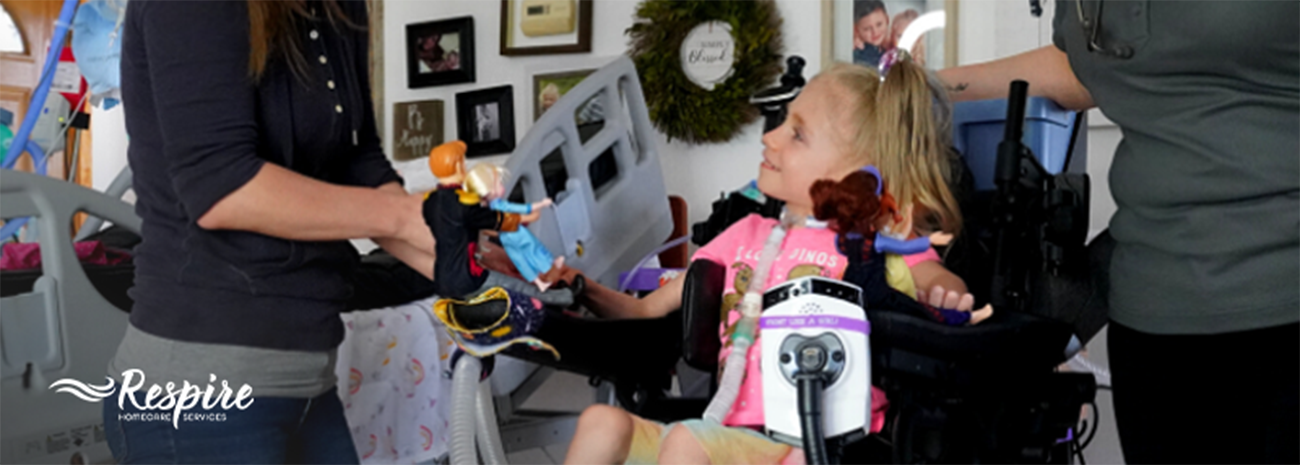
Discharge day is a milestone, but bringing a child home with respiratory equipment can also bring questions about alarms, supplies, sleep, and how care will fit into daily family life.
Whether your child uses oxygen, a tracheostomy, a ventilator, CPAP, BiPAP, or airway-clearance equipment, the first month often involves following the discharge plan, organizing supplies, and turning training into a workable routine. New questions are normal as your family learns how the equipment and care plan work at home.
Through RespireKids+, Respire Homecare supports medically complex children and their caregivers with pediatric respiratory equipment, education, hospital-to-home coordination, and ongoing respiratory support. Understanding what the first 30 days may involve can help your family approach the transition one step at a time.
While every child’s needs are different, understanding what the first 30 days may involve can help families set realistic expectations and approach the transition one step at a time.
Medical Disclaimer: This article provides general educational information and doesn’t replace your child’s discharge instructions, physician orders, emergency plan, or clinical care. Follow the instructions provided by your child’s hospital, prescribing provider, and respiratory care team. Call 911 or seek emergency medical care when directed by your child’s emergency plan or when your child appears to be in immediate danger.
Quick Navigation
- What Should Families Expect During the First 30 Days at Home?
- Before Leaving the Hospital: Questions to Ask
- What to Expect the First Night Home
- The First Week: Turning Instructions into a Routine
- Weeks Two Through Four: Building a Sustainable Home Routine
- Getting Familiar with Your Child’s Respiratory Equipment
- When Equipment Alarms or Questions Come Up
- Helping Other Caregivers Learn the Routine
- How RespireKids+ Supports the Transition Home
- Frequently Asked Questions
What Should Families Expect During the First 30 Days at Home?
During the first 30 days after bringing a child home with respiratory equipment, families may focus on following discharge instructions, organizing equipment and supplies, establishing daily routines, attending follow-up appointments, and becoming more familiar with the prescribed equipment.
Caregivers often continue learning throughout the month. Questions that didn’t occur during hospital training may become more apparent during bedtime, bathing, transportation, play, school planning, or other daily activities.
Every child discharged with a ventilator, tracheostomy, oxygen equipment, CPAP, BiPAP, or another form of respiratory support has individual clinical needs. The timing of follow-up care, routine adjustments, and caregiver confidence will vary.
A practical way to think about the first month is:
-
The first night: Getting settled, organizing equipment, and following the established care plan.
-
The first week: Turning hospital training into daily routines at home.
-
Weeks two through four: Refining routines, coordinating care among caregivers, and addressing new questions as they arise.
This timeline is a general planning framework, not a clinical schedule. Your child’s discharge plan and healthcare team should guide all care decisions.
Before Leaving the Hospital: Questions to Ask
Discharge planning is one of the most important parts of hospital-to-home ventilator support and pediatric home respiratory care.
Before heading home, families should make sure they understand their child's prescribed equipment, daily care instructions, follow-up schedule, and emergency plan. Written instructions can be especially helpful because there is often a lot of information to remember during discharge.
Questions may include:
- Who should we call with equipment questions?
- How do we obtain replacement supplies?
- What backup equipment or power arrangements apply to our child's setup?
- What follow-up appointments have already been scheduled?
- What instructions should we follow if equipment concerns or clinical concerns arise?
- Where can we find the manufacturer's guidance for our equipment?
Families should leave with clear contact information for equipment support, clinical questions, after-hours concerns, and emergencies. If any part of the plan remains unclear, ask the hospital or respiratory care team to review it again before discharge.
What to Expect the First Night Home with Respiratory Equipment
The first night at home can feel very different from the structured environment of a hospital room. Without hospital staff nearby, caregivers may find themselves listening closely to every sound, watching the equipment, and double-checking familiar steps.
Before bedtime, it can be helpful to make sure equipment is positioned according to training instructions, essential supplies are easy to access, and important phone numbers are readily available. This may include respiratory provider contacts, physician offices, and emergency contacts identified in the discharge plan.
It’s understandable to check the equipment more frequently during the first night. Familiarity may develop through repeated use rather than immediately after arriving home.
If a question comes up, use the appropriate contact pathway provided in your child’s discharge plan. Equipment concerns, changes in your child’s condition, and emergencies may require different contacts.
Don’t change prescribed ventilator, oxygen, CPAP, or BiPAP settings unless directed by the qualified healthcare professional responsible for your child’s care.
The First Week: Turning Instructions into a Routine
The first week often involves converting hospital training into a routine that works within the realities of family life.
A routine that seemed straightforward during training may take longer at home. Equipment may need to be repositioned, supplies may need a more practical storage system, and caregivers may discover that written reminders help everyone complete tasks consistently.
Many families find it useful to organize the week around:
-
Prescribed treatments and therapies
-
Equipment checks
-
Cleaning and maintenance tasks
-
Supply inventory
-
Medication schedules
-
Follow-up appointments
-
Caregiver handoffs
-
Documentation requested by the care team
-
Rest and sleep routines
Written checklists can help organize responsibilities, but they don’t replace formal training or the child’s prescribed care plan.
When multiple people provide care, use a consistent method for communicating:
-
Which treatments were completed
-
Whether equipment questions or alarms occurred
-
Which supplies were opened or used
-
Whether anything changed in the child’s comfort or routine
-
Which questions need to be brought to the respiratory or medical team
Clear handoffs can reduce confusion and help each trained caregiver understand what happened during the previous shift or part of the day.
Weeks Two Through Four: Building a Sustainable Home Routine
As the month progresses, routines often become more predictable. Families frequently discover small changes that make day-to-day care more efficient, such as rearranging supply storage, improving equipment access points, or refining schedules.
Weeks two through four may involve:
-
Attending follow-up appointments
-
Asking new questions that emerge during home care
-
Reordering supplies before inventories run low
-
Coordinating responsibilities among parents, relatives, or other caregivers
-
Integrating respiratory care into school planning, meals, sleep schedules, and activities
For families caring for a medically complex child at home, these adjustments are an ongoing process. Becoming familiar with respiratory equipment does not mean every question disappears by day 30. New situations and new questions are a normal part of home care.
Read More: Life on Home Ventilation: What Families Should Know
Getting Familiar with Your Child's Respiratory Equipment
Pediatric respiratory care at home may involve one or several devices, depending on the child’s diagnosis, prescription, and care plan.
Examples may include:
-
Ventilators
-
Tracheostomy supplies
-
Suction equipment used to remove secretions from the airway
-
Oxygen equipment
-
Nebulizers, which deliver medication in a fine mist
-
Airway-clearance devices that help move mucus
-
CPAP and BiPAP systems that support breathing
Not every child uses every type of equipment. A child with a tracheostomy and ventilator may have different routines, training requirements, backup plans, and supplies than a child using oxygen therapy or CPAP.
The RespireKids+ Respiratory Program includes pediatric ventilator management, tracheostomy care education, oxygen therapy, CPAP and BiPAP assistance, airway-clearance services, caregiver education, and pediatric respiratory support.
General educational information may help families become familiar with common terminology, but the child’s prescribed equipment, physician orders, manufacturer instructions, and discharge plan should always guide care.
When Equipment Alarms or Questions Come Up
Equipment alarms are designed to signal that attention may be needed. The meaning of an alarm and the correct response depend on the device, settings, child, and care plan.
If an alarm occurs, follow the guidance provided during training and refer to the clinical plan developed for your child. Caregivers should not change prescribed ventilator, oxygen, CPAP, or BiPAP settings unless directed by the prescribing or respiratory care team.
Similarly, alarms should not be disabled unless specifically instructed by qualified clinicians.
Questions that arise after discharge should be directed to the appropriate support resource identified in the discharge plan. Some situations may require equipment support, while others may require clinical evaluation or emergency assistance.
Related Reading: Ventilator Emergency Go Bag Checklist
Helping Other Caregivers Learn the Routine
Many children receive support from multiple caregivers, including parents, grandparents, relatives, or professional caregivers.
It is important not to assume that someone understands the equipment simply because they have seen it before. Consistent instruction, supervised practice, and access to written information can help caregivers understand their responsibilities more clearly.
Families may want to keep key contact numbers, care instructions, and equipment information in a central location where all caregivers can access them.
Reading an article or observing equipment use is not the same as receiving formal training.
Anyone responsible for providing care should receive the education and instruction recommended by the child's healthcare team.
How RespireKids+ Supports the Transition Home
The transition from hospital to home is a significant step for families of medically complex children. Through our pediatric respiratory care through RespireKids+, we help support infants, children, and adolescents with a wide range of respiratory needs.
Our team provides home respiratory equipment setup and training, caregiver education, coordination based on physician orders, and ongoing support designed around each child's respiratory requirements. Families also have access to experienced respiratory clinicians who understand the unique challenges associated with pediatric respiratory care.
In addition, our clinical respiratory services available at home help ensure families have access to ongoing respiratory expertise after discharge.
If you are searching for a home ventilator provider for children, pediatric tracheostomy support at home, pediatric respiratory therapist support, or 24/7 respiratory support for families, we encourage you to contact our respiratory home care team to discuss your child's needs and determine service availability in your area. You can also find a Respire Homecare location near you to speak with us in person.
Frequently Asked Questions
How should we organize respiratory equipment at home?
Many families find it helpful to create designated areas for equipment, supplies, and backup items. Frequently used supplies should be easy to access, while emergency contact information should remain readily available.
The ideal setup depends on your child's equipment and care plan, so follow any instructions provided during discharge training.
What should we do if our child's respiratory equipment alarms?
Follow the child-specific alarm instructions provided during caregiver training. Different alarms can have different causes and responses depending on the equipment involved. Refer to your discharge plan, equipment manual, and support contacts.
Do not change prescribed settings or disable alarms unless directed by your respiratory or medical team.
Can more than one caregiver be trained to use the equipment?
Yes. Many families have multiple caregivers involved in daily care. Consistent training and supervised practice help promote continuity across caregivers. Anyone responsible for providing respiratory care should receive the education recommended by the child's healthcare team rather than relying solely on observation or written instructions.
How often should pediatric respiratory equipment be cleaned?
Cleaning schedules vary based on the equipment being used and the manufacturer's recommendations. Follow the instructions provided by your care team and the equipment manufacturer. Avoid assuming another device follows the same cleaning schedule, even if it appears similar to equipment you have used previously.
What information should we keep near the equipment?
Many families keep emergency contact numbers, equipment support contacts, written care instructions, supply information, and provider information in a location that is easy to access. Your discharge plan may identify additional information that should remain readily available for caregivers.
When should we call our respiratory provider instead of our child's doctor or 911?
The appropriate contact depends on the situation and should be determined by the child's discharge instructions. Equipment-related concerns may be directed to a respiratory provider, while clinical concerns may require contact with the medical team. Emergencies should be handled according to the emergency guidance provided by your child's healthcare team.
Comments